

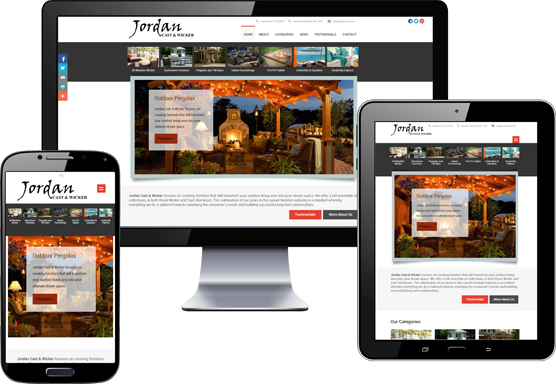
Over the years Ecommerce websites have grown to maturity and this is no surprise. The concept of shopping over the internet was a no-brainer right from the start. The powers-that-be predicted the swing in sales trends right from the start. Did you know that in China alone over 63% of internet users shop online - which translates to 63 million users... So if the same can be said for the rest of the civilized world over 600 million users globally will use a shopping cart this year.
Here at SynergyPro Solutions we have been designing and hosting Ecommerce solutions for over 10 years now. We started by launching our own eStores back in the mid-90s for our AutoHotline.com and RVHotline.com properties and have been receiving requests for proposals ever since.
A lot of business owners have some fairly large misconceptions about ecommerce websites and the 'shopping cart solution'. You can purchase a cheap 'shopping cart' solution online and plug it in. But it's just not that simple.
To design, implement and properly market a static website is one thing. To launch a well-planned, user-friendly corporate site that both successfully portrays your brand and converts users into viable contacts and future customers is a difficult and resource-consuming task. So - add a complex online application like an ecommerce package and a credit card transaction system or gateway service and you have a recipe for disaster. The last thing you want to do is launch with a system that either doesn't work well or hasn't been properly implemented. And if the system you choose doesn't look like the rest of your site it will certainly appear cheap, unprofessional and will affect your end users' trust level. We won't even get into search engine optimization and successfully driving qualified traffic to your new eStore.
So you see? Choosing an experienced partner to guide you down the long and dangerous development highway is absolutely the first and most important decision you should be making.
If you decide however to try to implement an ecommerce website yourself we have included below a series of helpful tips to guide you through the process.
Over the past decade we have refined our approach to shopping cart design and implementation to a number of very helpful 'tips':
ONLINE PAYMENTS
There was a time when companies with smaller budgets made do with a pseudo-commerce website, remember them? Instead of processing the user's credit card at the end of the purchase cycle the company used a simple form to record the item numbers and quantities and a contact number to complete the transaction by phone, the old 'send me a cheque' method.
These days you will lose customers unless you provide instant gratification! Don't compromise and launch with this type of solution, even if the intent is to upgrade in the near future... You will weaken your brand! You will lose customers and your bottom line will feel it. Scrape the barrel for budget and do it right the first time - you will benefit in the end.
Don't get us wrong though! By scraping the barrel we don't mean you have to invest a ton of money. There are some very inexpensive packages out there - and better yet - at SynergyPro Solutions here in Hamilton we can develop the simplest of solutions and your final invoice will surprise you. Fill out our Quick Quote form and we'll show you just how inexpensive an ecommerce solution can be.
YOUR SITE
Think of your site as a store front. And think of the user as a window shopper. The goal now is to entice that window shopper to open the door and buy that item they saw in the window.
Your site must be well crafted and designed to lead the window shopper through the buying process easily and without confusion. The idea is to keep it simple. Each screen in the chain of events should be easy to understand and well explained and if there are any spelling errors or grammatical inconsistancies the user will catch them and it will hurt you. So make sure the entire system is well tested and proof read.
Text can be your friend through all of this. Use it - but don't over use it! You need to think about the instructions and opening and closing paragraphs and riddle them with keywords and catch phrases. Think about what users will type into the search engines to find a business like yours and write your copy around those terms. It is a fine line however between under and over doing it so be smart, be careful and use professionals whenever you can. Hire a copywriter if you think your copy sounds contrived. They will help you smooth it out and if you give them a list of key terms they will make your content work hard for your site.
SEARCH ENGINES
Search engines are the key to your online success. Everyone uses them, even when they don't realize it. And the top three spots on a search return represent 98% of all web traffic. So the importance of designing your site to do well in a search is the most important aspect of your online efforts - because if no one can find you it doesn't matter how great your site looks or works.
Unfortunately, in the past, Search Engine Optimization was the most overlooked task on any corporate web endeavour. Today, through trial and error and education many companies are spending far more time and money on this critical piece of the marketing puzzle. How do we get people to our site?
There is a great tool that professional SEMs use on Google called Insights for Search. Here you can find out just what search terms people use to find companies in your industry. It's valuable insight into live searches done by the very people you are looking to reach. Use it to compare search volumes across regions, time and industries for any given keyword so you can target the very searches people actually use. It's one thing to compile a list of terms you think are important to your product or service and use them throughout your website - but those terms may not necessarily be the terms your customers are using. All keyword optimization is useless without this kind of insight.
Even if you have hired a company to do your SEO try Google's tool and evaluate the job being done. You may be pleasantly surprised.
WEB BROWSERS
The bane of a web developer's existance is cross-browser compatibility. What's that you ask? The application you use to 'surf the web' is called a browser - and there are a few of them out there... Over 100 to be exact! Now 94% of the world use two of them but as an online marketer with an ecommerce website you need to consider them all. Why alienate anyone who visits your site? As a business owner or manager you need to ensure that anyone visiting your site sees what they're supposed to see and that everything works the way it's designed to work. So make sure you choose your design firm carefully because - guess what? Every browser treats the items on your site a little bit differently.
The button that says "Buy Me" beside your best selling product might work fine in Internet Explorer but in Opera it may disappear off the side of the page. That "terms of use" warning that pops up properly in Firefox may not work at all in IE6... The list of inconsistancies between the most popular browsers is over a mile long so make sure you or your designer(s) test your website in as many browsers as possible and in more than just their latest versions or you will lose customers.
Sure, you can't please everyone all of the time but at least you can be sure that you give them your best effort - and cross-browser compatibility is very important.
A PROFESSIONAL IMAGE
We cannot stress enough the importance of images, photos and illustrations. Nothing says 'cheap' like bad clip-art and blurry, pixilated pictures. The best way to retain your professional image is to use original, high quality imagery on your ecommerce website.
Get yourself an account at one of the many great Stock-Image websites out there are or make sure your design firm uses one. They don't cost a lot yet their value is incalculable.
If you sell products - get a professional in to do your photography.We cannot stress enough the value in a professional set of product shots. They can be used in so many advertising and marketing projects over the course of their relevance that they will pay for themselves after the first use, and they will continue to make you look good long after the flash spots fade from your retinas.
On an ecommerce site nothing says quality like great product shots and to try to fake them just tells the world that you don't stand behind what you sell. The first thing we ask anyone looking to hire us is "Who is doing your product shots?"
GUI (GRAPHICAL USER INTERFACE)
The term GUI refers to your site's interface or the layer of controls that allow a user to navigate from one page to another, from one screen to the next, from one product to another... The menus, the buttons and what we call in the industry - "calls to action" (buttons or links that entice users to perform a desired action).
The ease-of-use of your ecommerce website relies on it's GUI. The buttons in the menu need to be descriptive and positioned in places of prominence, the "add to Cart" buttons need to be large and clear. Think about the size of the text. The colors of your buttons and the words on them need to have sufficient contrast so as to amke them visible to people who have poor eyesight. Think about where they are in relation to the descriptions, price and product images and be sure they are in places of prominence. Think about what those buttons say and make sure to be creative and clear in your pitch, convincing them to click!
Don't put too many buttons on one screen to avoid confusion - too many choices is bad practice. If you have to break down the screens so that they offer less choices do it. Use "NEXT" or "CONTINUE" buttons to lead the user through the process if you have to. But keep this in mind. Interface 'best practices' say that you should never sink content more than three clicks in. In other words your end user should be able to accomplish anything they need to with no more than 3 clicks from anywhere on the site.
And don't make assumptions! If you think it may be a bit too complicated - it probably is. Dumb it down a bit. Not everyone who finds your site will be power-users! Some people still struggle with the logic of purchasing online. The last thing you want is for someone to have picked a product, made a decision to buy it but then left your site because they couldn't figure out how to use it. Power-users will still purchase if the site is slow and simplistic - but new users won't buy if you scare them away with a bad interface.
SUGGESTED CONTENT
The mystery of an ecommerce site can be broken down like this: There is a home page, product listing pages, product detail pages, a shopping cart page and a regisration/payment gateway. That's it! But don't just build the essentials and walk away - because - that's right! you'll lose customers... Some people need a little more convincing than a product picture to part with their hard-earned money.
Inject some 'assurance' into the project. You should have at least the following static pages for those consumers who like to know a little more than just what you sell.
About Us or Who We Are
Tell the world a little about yourself. Where do your roots lie, when did you start, who owns the place, what do you believe in or stand for and where do you see the company going? You need to build a trust, put a face to the place. You don't have the advantage of a sales team in this world so you need to be descrptive, you need to offer a little more about yourself than just some prices and a "Buy Me" button.
Testimonials
The purchasing experience of others will be way more believable than anything you can say about yourself so be sure to include some reviews, some product feedback or some letters from satisfied customers. Take it a bit further and use your site to collect feedback with a simple form somewhere asking users to offer some personal feedback. You could even post these 'reviews', positive or negative, straight onto the site becasue a little negative feedback mixed in with the rave reviews tends to look a little more honest and realistic than nothing but the same five-star expletives month after month.
Frequently Asked Questions (FAQ)
Often when you build a working application like an ecommerce website there are the usual set of questions that seem to come up time and time again. Why not save yourself a little time and extra effort by posting the best of those questions somewhere that's relative to the source of said questions. Explain why you need their personal information, exactly how do you deal with shipping charges?, what is your return policy, etc. The term FAQ is widely understood even in other languages so include one and you'll find the phone ringing that much less.
Privacy Policy and Terms of Use
The legal aspects of what you are doing need to be included somewhere on the site. Most companies hide it down in the footer links somewhere but you really need to let your users know what you do with collected information, what rules apply to the uses of your product or service, what you will and will not stand for when it comes to your online offerings. Again, not many people will ever take the time to read through these pages but for those who like to be thorough you need to include them. We'll say it again - you don't want to lose anyone because you weren't clear.
THE PROCESS
It's all so confusing with the payment gateways and the merchant accounts and the shopping carts and the turnkey ecommerce plug and play applications... OK - pay attention and listen carefully because this is it in a nutshell:
- The search engine has sent you a visitor - Whoa Hoo!
- The visitor clicks on one of your most excellent "Buy Me" buttons...
- That item gets added to their "Shopping Cart"
- From the cart the visitor decides to 'check out' so their personal and payment info is securely collected
- and sent via a third party 'payment gateway' service to the various relevent financial institutions
- If all is in order the visitor's credit card is debited and your merchant account is credited!
- And finally, when everything is verified and has cleared you can access your merchant account and transfer the visitor's money to your regular business account.
So - the only tricky part here, really, seems to be that "payment gateway" thing we mentioned briefly... And what is a merchant account and where do I get one?
If you hire a firm to build your site - chances are they have done this before and have a working gateway partner already. We sure do! And if you have any kind of budget - request a quote - from us and save yourself the headache of all the trial and error. Let us guarantee your online success by guiding you through the pitfalls, traps and unknowns involved with online commerce.
MERCHANT ACCOUNTS
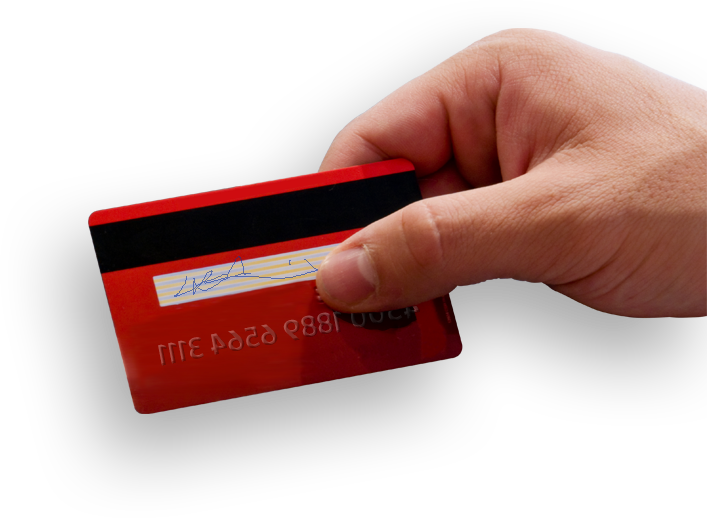
You must have an internet merchant account for receipt of credit card funds... You must have a payment gateway service in place to verify and transfer those funds to the proper institutions. And this is the most important decision you'll make when starting your online business. Do I get my own merchant account and set up a gateway service? Or do I use a service like PayPal to handle it all and pay them a service fee?
There are many places to go for a merchant account including your local bank. But banks are not as practiced at enabling merchant accounts as some of the specialty companies out there - you are far batter off going to an online merchant account provider and there are many in Canada and the US.
You need to be very careful however because they are all a bit different. Keep the following charges in mind when researching the various sources:
- monthly statement charges
- application fees
- additional setup fees
- discount rates for quantity sold
- non-qualified rates
- transaction fees
- monthly minimums
- chargeback reserves
- fraudulent chargebacks
So, as you can see the variations on fees alone between providers can make the difference between success and failure when it comes to online transaction partners and services. Check them all out and steer clear of any that don't seem to have competant sales staff. If their staff can't answer every question you have then they don't do this much and you don't want to have anything to do with them...
Ask as many questions as you can and pick the brains of everyone you talk to - the more you discuss merchant accounts and payment gateways the more you'll learn and you may just decide to roll them all up into one service provider, one that will handle the entire process for you. As mentioned - they will charge a little more but their experience will make it all worthwhile in the end.
PAYMENT GATEWAYS
Payment gateway services handle the behind the scenes parts of your transactions. They communicate between your website, your customer's credit card company and your online merchant account - and they do it all instantly, securely and they're not free!
There are a few things to consider when choosing your gateway partner as well. First of all ensure that your shopping cart software is compatible - there may be no way to connect to the gateway if your software isn't configured yet. Every shopping cart package will have a list of compatible gateway providers. The smart approach is to choose your gateway first and then find out which shopping cart applications and services they support. Be sure that you do your research with both in mind. It will save you great expense down the road.
Fraudulent transactions will sink you faster than anything else when it comes to ecommerce. The financial institutions will charge massive service fees for chargebacks. So be sure that the payment gateway you are looking at has some form of transaction protection. A big one now is AVS, or Address Verification System and it will help to reduce the number of painful charegbacks. The user has to enter their proper billing address for the transaction to process properly.
SALES SUPPORT
It may not be enough for some customers that you have a well-planned and easy to understand purchasing interface. You may need to convince your online customer... And how can one do this via a website? Downloadable PDFs, email forms and feedback systems and customer support services.
Why not add a well-branded sales sheet to each product? Something easy to find, quick to download or print, something to support your pitch. Something they can hold on to, take to the local cafe and mull-over. Something to show their friends or family.
Email support is another way to help convince your prospective client. Link to a "Questions?" form somewhere within your product display area. Something that allows the client, at the last second, to contact you quickly and easily for those last-minute questions that may arise. You already have an FAQ page but sometimes clients come up with very specific questions at the last second. Make it obvious that you are there to answer these questions and be SURE to answer them asap... Be prompt and be thorough and you'll probably close the deal.
More and more common now are Live Support modules as well. It's fairly easy to implement a customer chat window so that your sales staff can answer live questions at the point of purchase. How great is it to cut through the 800 numbers and the "on hold" signal and get a quick answer to a question while on a company's website.
The bottom line is try to make as many ways for the customer to contact you as you can available once they find your product pages. It will show that you care about each and every question and always thank them for their interest and attention - the personal touch is so easy to achieve online these days that there really is no excuse anymore for static websites. It is your most powerful and accessible storefront so treat it with the time and effort it deserves - make it interactive and make it a pleasure to use!
If all of this seems a little too much and you're still thinking of opening your own online store give us a call or request a Quick Quote today and get started now. The longer you wait the more new customers you lose and those lost relationships are hard to regain once an online customer has been turned away the first time.
If your company already has an ecommerce component and you want to upgrade or rebuild it we can do that too. Our developers are excellent at what they do. They will analyze your current system, make a series of recommendations based on your goals or requirements and then quickly and efficiently implement the approved upgrades while at the same time ensuring zero down-time
and zero missed sales.
We have included below an example of a very simple ecommerce solution that is
currently in development. This example represents the most inexpensive shopping cart solution we offer and includes an easy to use backend for adding and removing products and showcasing specials. The timeline on a similar project is less than two weeks from start to finish and the price allows for even the most conservative budgets.